I study how security is produced through everyday institutional practice.
My research examines how security practitioners interpret risk, rely on professional judgment, and translate formal policies into situated decisions—and how those decisions reshape institutions, understandings of risk, and relations of authority.
Grounded in long-term ethnographic fieldwork across Canada, Europe, North Africa, and the Middle East, my work spans policing, counterterrorism, counter-extremism, and security-sector reform.
Across these domains, I investigate the organizational, professional, and affective dynamics of risk governance, particularly the gap between policy as designed and security as practiced.
● NOW AVAILABLE
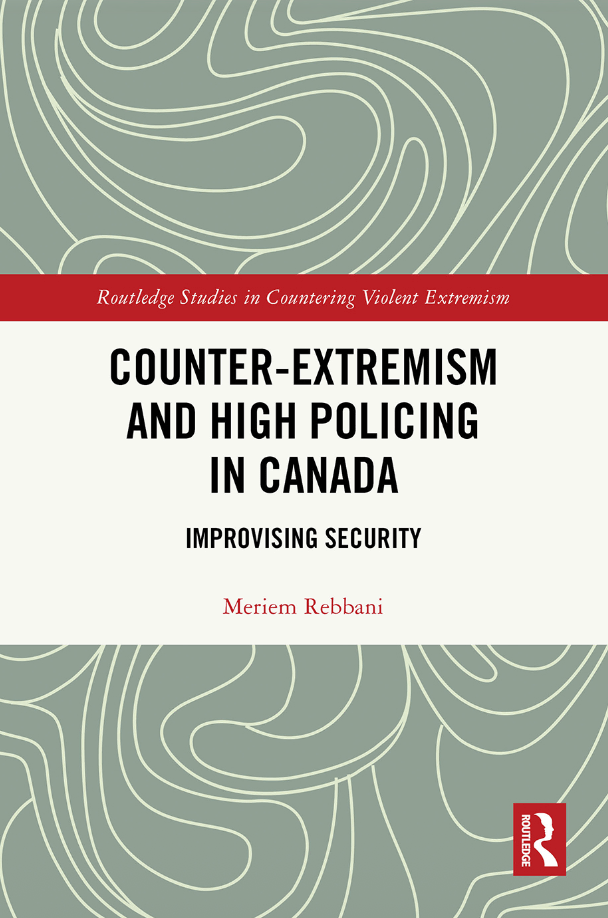
Counter-Extremism and High Policing in Canada
Improvising Security
Drawing on seven years of embedded fieldwork, it explores how legal ambiguity, bureaucratic constraints, and racialized risk logics shape the daily work of CVE practitioners.
Routeledge, 2026
○ UPCOMING BOOK

Doing Autoethnographic and Qualitative Research in High-Security Fields
Studying Up
This book develops a practical and interdisciplinary framework for conducting qualitative research in secretive, politically charged, and institutionally closed environments.
Palgrave Macmillan, forthcoming
✦ FUTURE PUBLICATIONS
Feeling Security: Uncertainty and the Affective Burden of National Security Work
Co-authored with Dr. Karine Côté-Boucher, Université de Montréal
This articles explores how practitioner’s of national security mobilize feelings and emotions in the name of the state’s protection under the shadow of terrorism. It develops the concept of affective discernment to examine how national security practitioners feel their way through uncertainty and make consequential judgments about risk. It shows how professional socialization, institutional pressures, and emotional responsibility shape discretion and accountability in high policing.
Negotiating Access from Within: Practitioner–Researcher Positionality in National Security Ethnography
What happens to ethnographic access and analytic independence when the researcher becomes a professional participant in the national security field being studied? This article exmines how professional embeddedness shapes access, positionality, data production, and ethical boundaries when conducting ethnographic research inside national security institutions.
↗ CURRENT RESEARCH PROJECTS
Imagining Terror and Dangerousness
Investigates the role of imagination, emotions, futurity, and uncertainty in practices of risk assessment.
Hybridization of National Security Practices
Drawing on the concepts of liquid modernity and liquid security, this project examines how increasingly fluid boundaries between high policing, social work, education, and prevention produce hybrid national security practices and new ways of interpreting and managing risk.
 Meriem Rebbani, PhD