My work examines how global security governance operates in practice through long‑term ethnographic fieldwork in Canada, Europe, and the Middle East. I analyze how international mandates—such as counter‑extremism frameworks and national security reforms—are translated, improvised, and contested by frontline actors.
Across these projects, my research contributes to international relations, socio‑legal studies, and critical security scholarship, particularly on themes including New Public Management in security reforms, the neoliberal rationality underpinning securitization, transnational legal ordering and norm translation, and the political dynamics of securitization within domestic legal–institutional contexts.
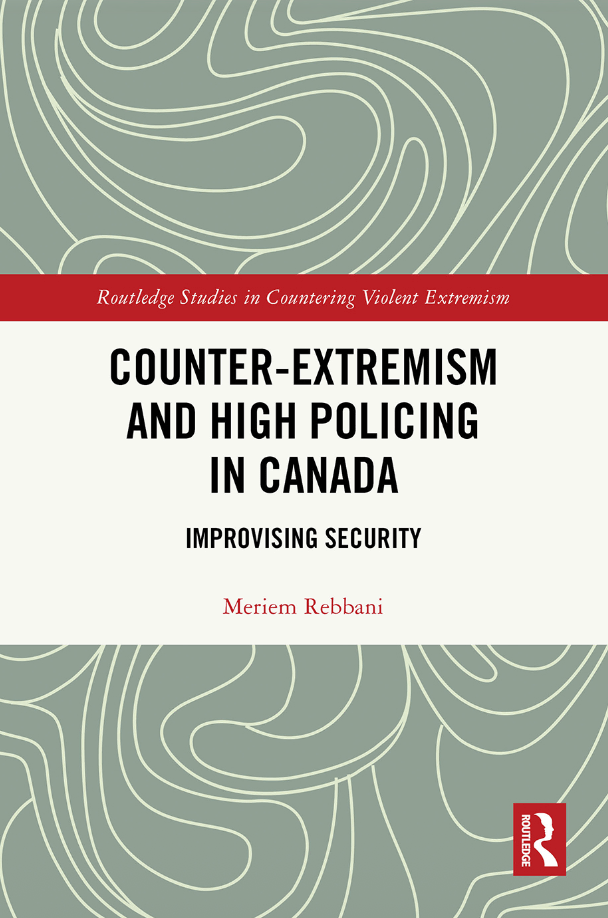
New Publication
Counter Extremism and High Policing in Canada: Improvising Security (Routledge, 2026) is the first ethnography of Canada’s counter‑extremism policies. Drawing on seven years of embedded fieldwork, it explores how legal ambiguity, bureaucratic constraints, and racialized risk logics shape the daily work of CVE practitioners.
Current Projects
CVE as Actuarial Justice – Situates CVE in the broader turn toward risk and predictive governance in justice systems.
Imagining Terror and Dangerousness – Investigates the role of imagination, futurity, and uncertainty in radicalization risk assessment.
Hybridization of National Security Practices – Builds on ethnographic findings to propose a hybrid model of high and low policing.
Deep Hanging Out in National Security Fields – A methodological reflection on immersive ethnography in counterterrorism and crime control research.
Research Themes
Security Governance, Critical Criminology, Ethnography, National Security Studies, Preventing/Countering Violent Extremism (PVE/CVE), Counter-Terrorism, Risk Assessment, Community Policing.
 Meriem Rebbani, PhD